


Eco friendly DIY House Cleaning Recipes
If you’ve ever bought a cleaner that promised you “fresh breeze” but instead it delivered a headache, you should really consider the “natural way” of cleaning. More and more people are now saying no to these easy cleaning chemicals and going for DIY, eco friendly cleaning alternatives that can clean just as well as their synthetic counterparts.
With just a handful of pantry staples and a few minutes of mixing them, you can create your very own, safe, effective cleaners. They will leave your home shining, minus the chemical fog. Plus these simple recipes often cost far less than store bought products, and making them at home is a win for both you as well as our precious planet.
In the following guide, you will discover easy, natural cleaning solutions that you can whip up at home, along with tips on how and where to use them. You will also learn why these cleaners are becoming popular and how they will simplify your everyday cleaning routine. Increasingly, homes are now embracing natural cleaning even for major tasks like expert bond cleaning Ipswich. Altogether you will learn how accessible, effective and sustainable DIY cleaning can be for any Australian household.
Hide
Show
]- Why Take The Natural Cleaning Way?
- Must Have Ingredients For Your DIY
- All Purpose Vinegar Spray For All Surfaces
- Baking Soda Scrub Paste
- Streak Free Glass and Mirror Cleaner
- Citrus Infused Degreaser
- Natural Floor Cleaner Solution
- DIY Mould and Mildew Spray
- Infographic For Eco Friendly Recipes For DIY House Cleaning
- Wrapping Up
1. Why Take The Natural Cleaning Way?
Switching to natural, DIY cleaning products is not an eccentric or quirky lifestyle choice; it’s a very practical “need of the hour” choice. Store bought cleaners typically contain harsh chemicals, artificial perfumes and other ingredients, that can remain in the air, long after the cleaning is over. This can cause allergies, irritate delicate skin, and reduce indoor air quality. In contrast, DIY recipes rely on simple ingredients like, vinegar, baking soda, lemon or essential oils; items that are known for their gentleness and versatility.
The environmental advantages of these are also quite compelling. Making your own cleaners means that there will be fewer plastic bottles, fewer toxins will go down the drain and fewer manufacturing and transport emissions will take place. For homes that are aiming to reduce their ecological footprints, DIY cleaning is a very straightforward and meaningful step.
2. Must Have Ingredients For Your DIY
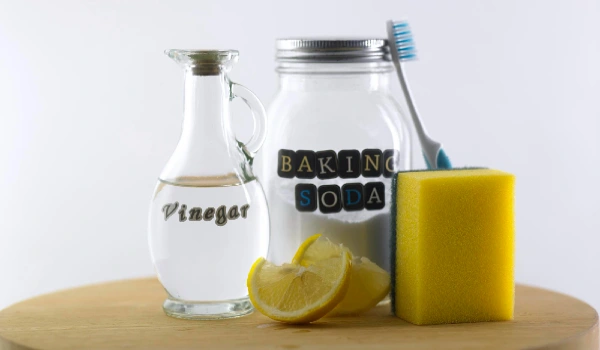
To get started with making your won solutions, you only need a few ingredients. For example:
- Vinegar: A natural acid and disinfectant; can cut through grease and grime. It is particularly good for kitchens and bathrooms.
- Baking soda: Good for scrubbing tasks, deodorising and lifting stains. Its mild abrasive quality helps remove buildup without scratching the surfaces.
- Lemon: The natural oils in lemon peel add fresh scent while also offering antibacterial properties. Good for removing soap scum and mineral deposits.
- Castile Soap: A plant based liquid soap that forms the base for many DIY cleaners. It works well for floors, benchtops and general surface cleaning.
- Essential Oils: Oils such as eucalyptus, tea tree and lavender provide natural fragrance and added antibacterial benefits. Many Australians already use these around the home, making them an easy addition to DIY formats.
With these basic ingredients you can create nearly all the solutions you’ll need to clean everything.
3. All Purpose Vinegar Spray For All Surfaces
This simple spray is one of the most versatile DIY cleaners that you can make. Combine equal parts white vinegar and water in a reusable bottle, and then add several drops of eucalyptus or tea tree oil for a fresh antibacterial kick. It works superbly on benchtops, tiles, taps and everyday high touch areas. The acidity of the vinegar helps break down grease and grime, while the essential oils leave a clean, natural scent around the home. It’s a low cost, highly effective option that many Australia’s prefer for their daily cleaning routines.
4. Baking Soda Scrub Paste
A baking soda paste is your best buddy when cleaning places that require a deeper clean. Combine a few tablespoons of bicarb soda with just enough castile soap or water to make a thick paste. This soft abrasive removes buildup from sinks, ovens, tiles, and even stainless steel appliances without damaging the surface. It is ideal for eliminating stubborn grime and restoring gloss to dull surfaces. Homeowners often use this between major clean ups; for instance, to maintain surfaces in the lead up to professional bond cleaning Ipswich services for some helpful support.
5. Streak Free Glass and Mirror Cleaner
A natural glass cleaner gives you streak free clarity without the harsh fumes of commercial sprays. Blend one cup of distilled water, one cup of white vinegar and a tablespoon of rubbing alcohol (or methylated spirits). Use a microfibre cloth to wipe surfaces clean, and you’ll be amazed at how quickly fingerprints and smudges disappear. This recipe works well for windows, shower screens, bathroom mirrors and glass tabletops, making it a handy addition to every household’s cleaning kit.
6. Citrus Infused Degreaser
Citrus peel contains natural oils, that help cut through stubborn grease, making it ideal for tackling kitchen mess. Fill a jar with lemon or orange peels, and cover them with vinegar. Allow the mixture to sit for one to two weeks, then strain and dilute with water at a 1:1 ratio. The result is a powerful, pleasantly scented degreaser, that works wonders on stovetops, rangehoods and benchtops. Many people also love it because it turns food scraps into a useful cleaning tool; perfect for reducing waste while keeping your home fresh.
7. Natural Floor Cleaner Solution
A gentle, all purpose floor cleaner helps maintain shine without leaving sticky residue. Mix warm water with a small amount of castile soap and a squeeze of lemon juice. This solution is suitable for tiles, laminate and sealed timber flooring. Use a damp mop rather than a soaking wet one to ensure surfaces dry quickly and streak free. It’s a particularly handy recipe for regular upkeep and can help keep flooring in good condition between deeper cleans like reliable bond cleaning Ipswich, which is required during lease end.
8. DIY Mould and Mildew Spray
Tea tree oil is known for its antifungal properties, making it a natural choice for bathrooms and damp areas. Combine one cup of water with one teaspoon of tea tree oil in a spray bottle. Apply the mixture to affected areas, leave it for a few minutes, then wipe away gently. For tougher spots, spray again and allow it to sit longer before scrubbing lightly. This recipe is a great non toxic way to manage bathroom cleanliness and reduce mould growth, especially in showers and tiled spaces that are frequently exposed to moisture.
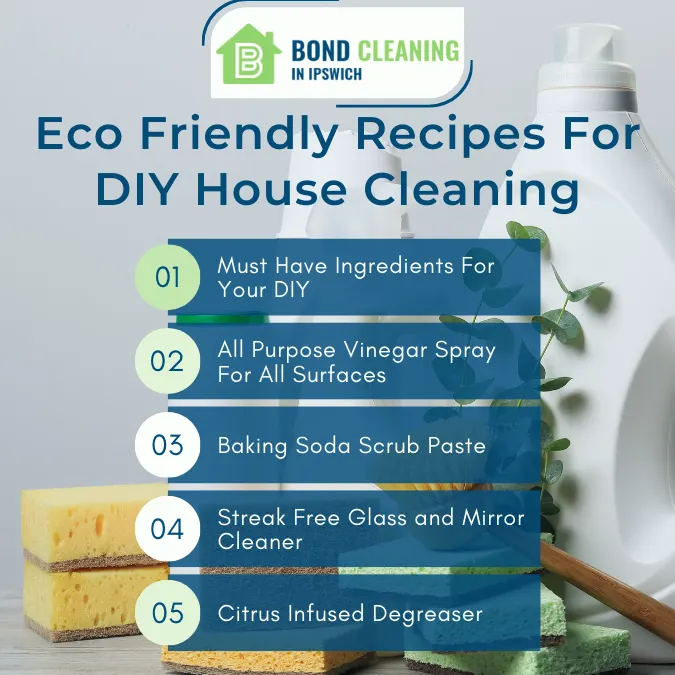
Infographic For Eco Friendly Recipes For DIY House Cleaning
Wrapping Up
Eco friendly DIY cleaning recipes provide an effective, safe and economical approach to care for your house with everyday ingredients. Simple combinations can help you maintain a clean and healthy living environment without the use of synthetic chemicals. These natural solutions minimise waste, save costs, and promote a more sustainable lifestyle, making them an excellent alternative for households around Australia.